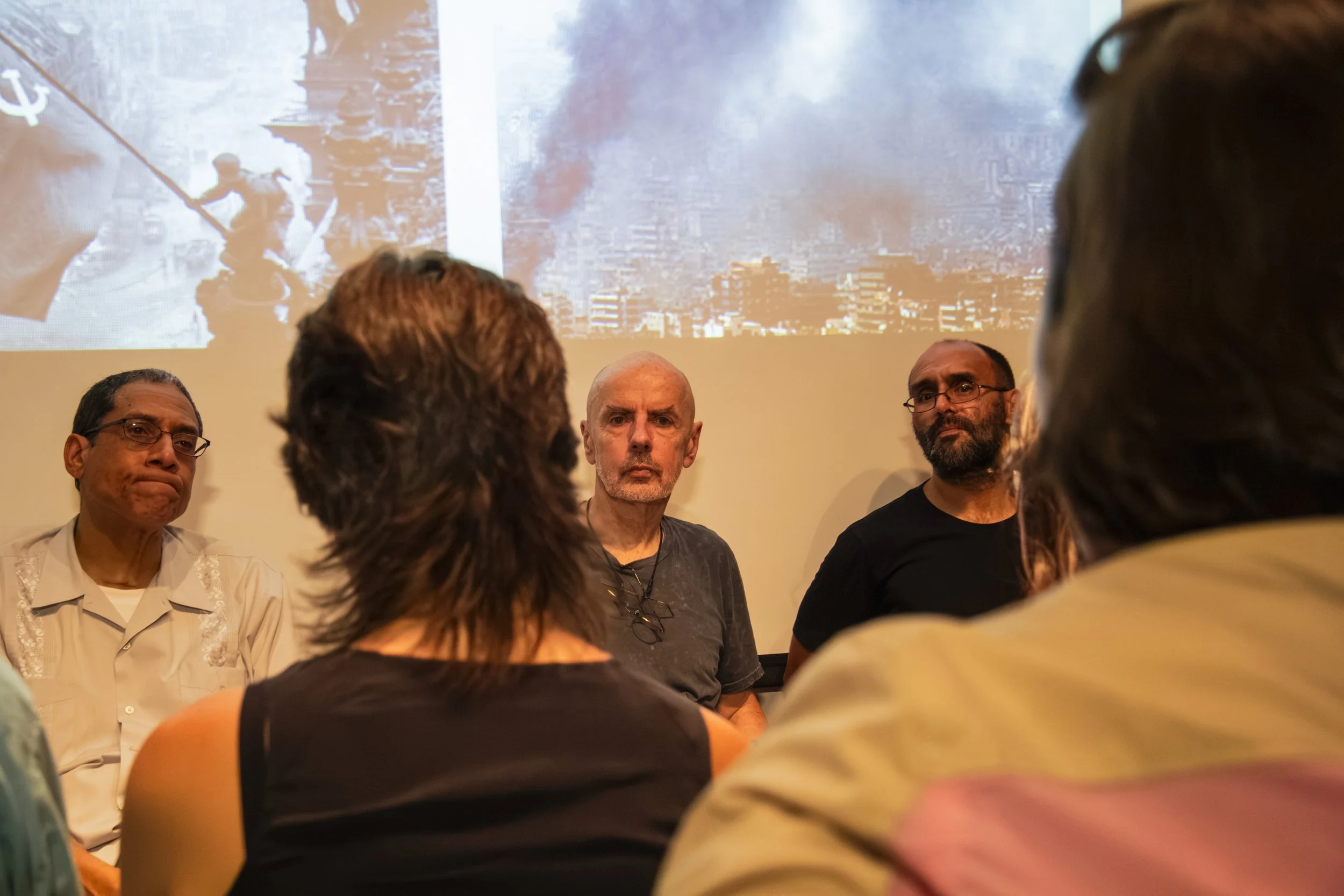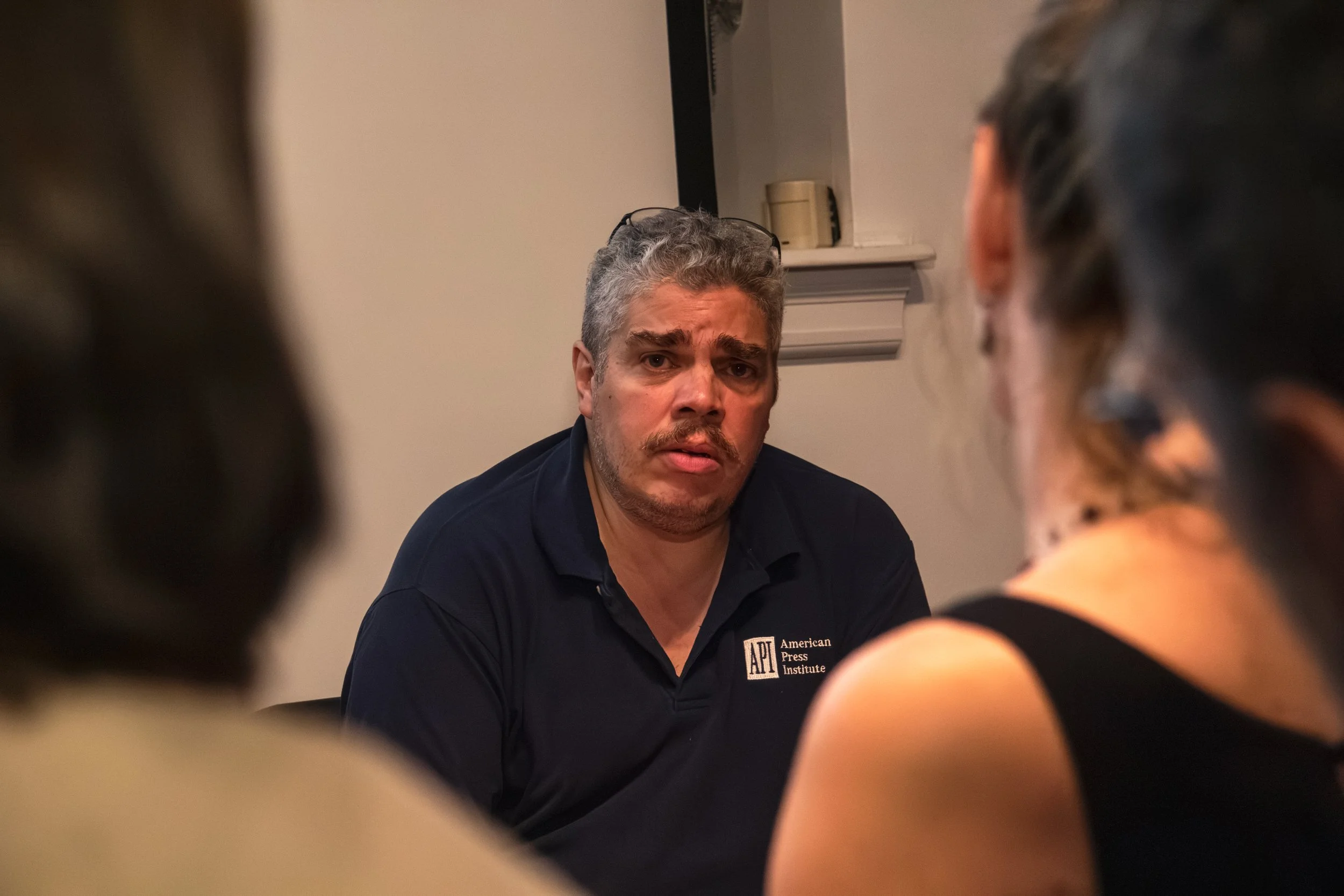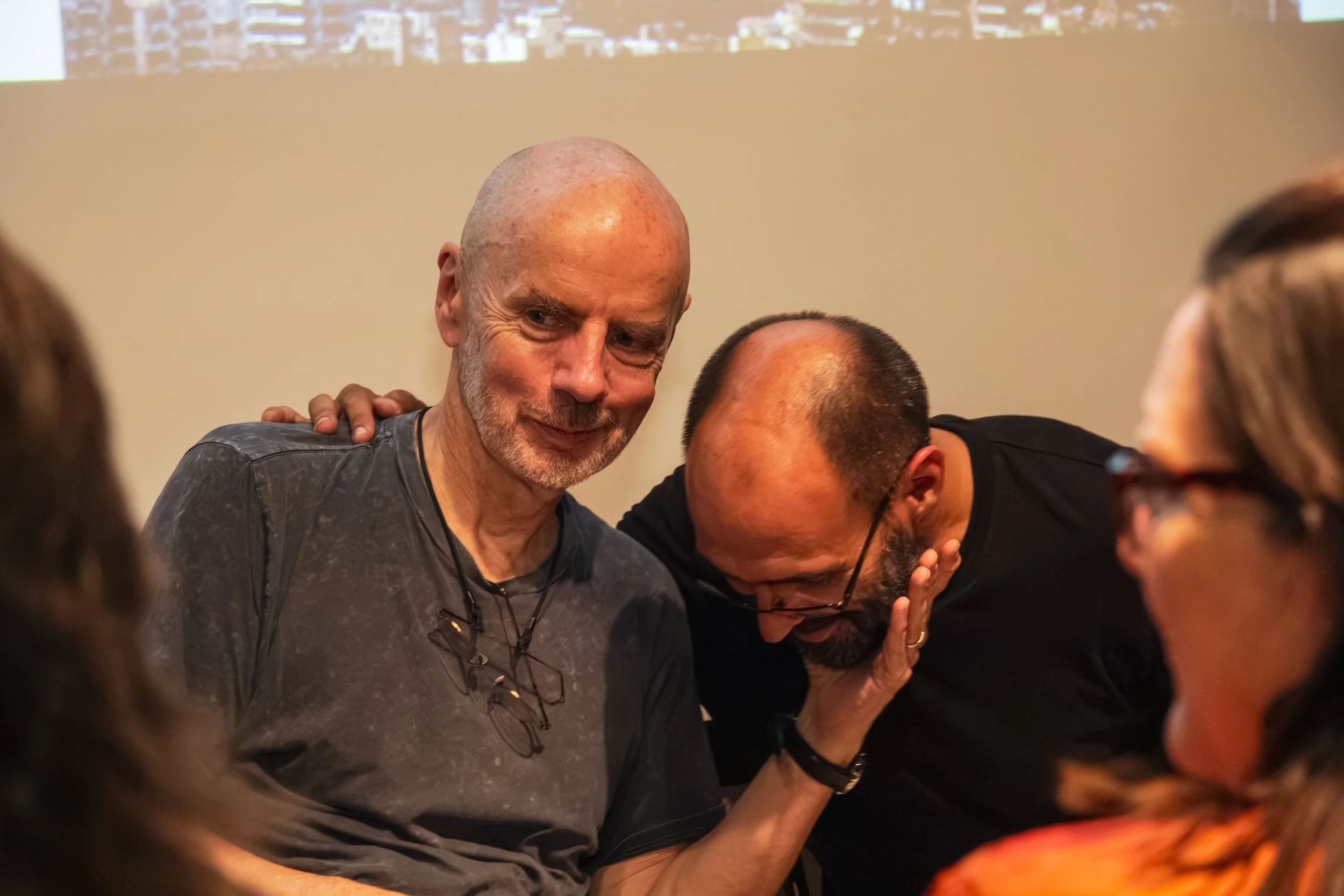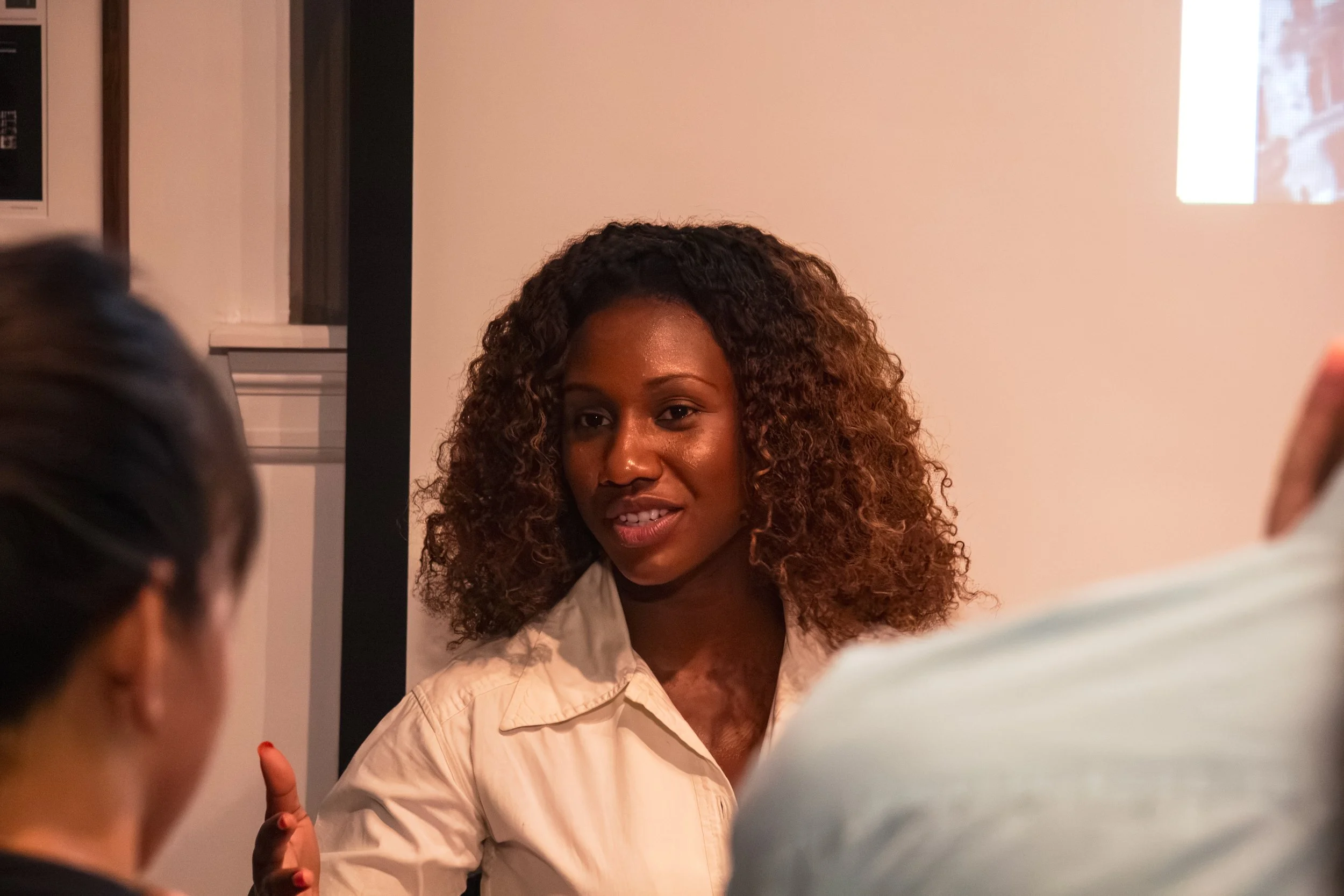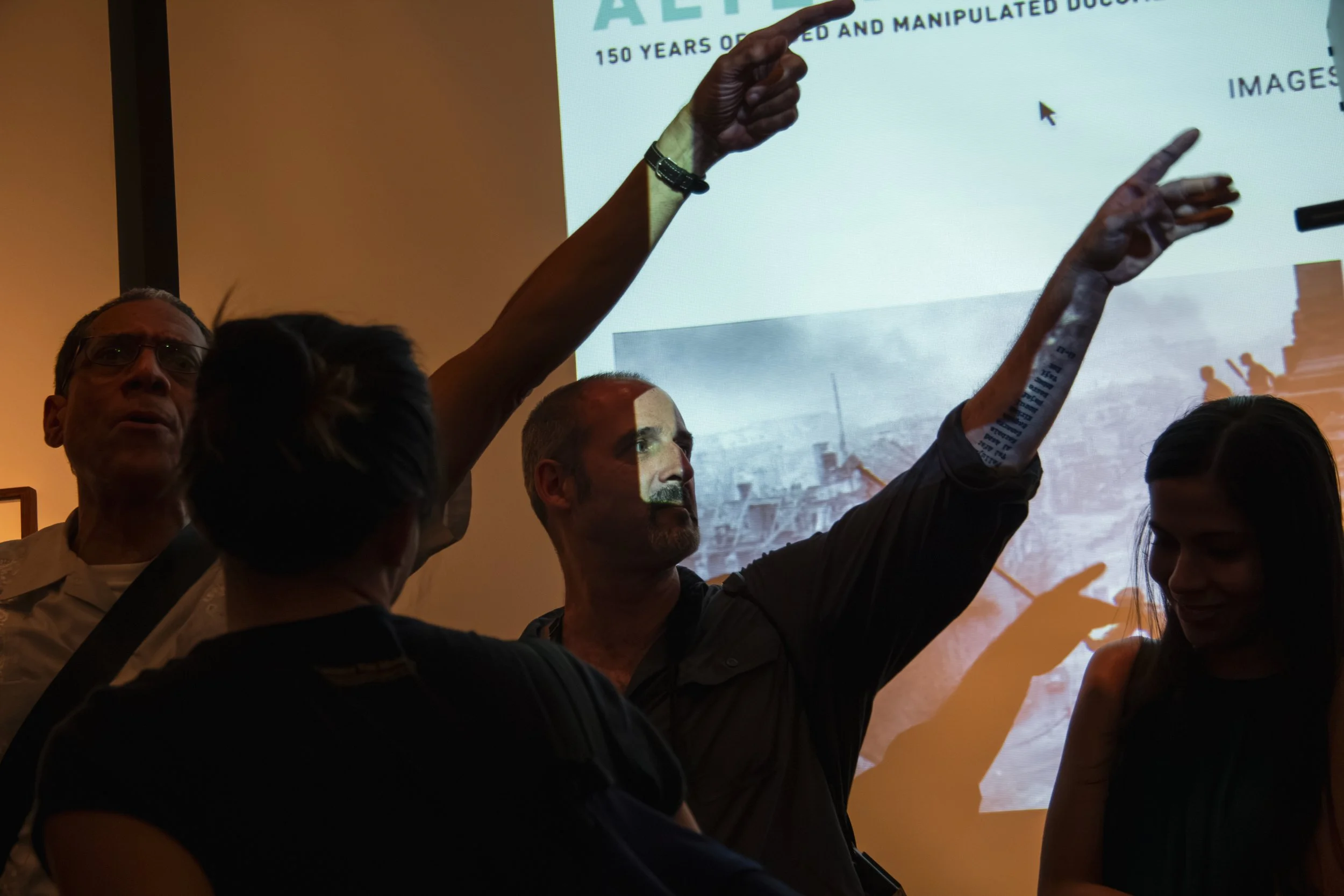
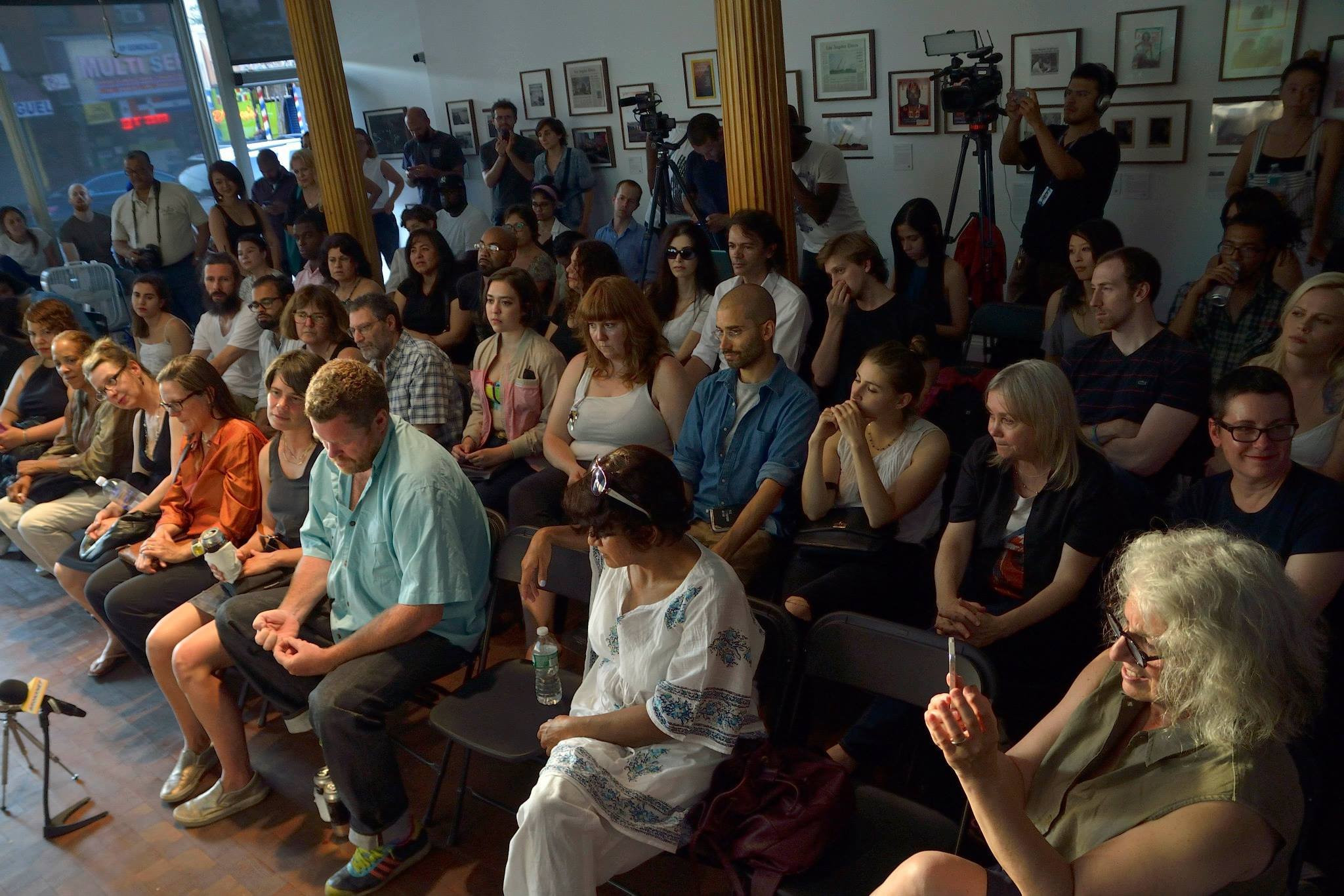
On Saturday, July 11, 2015, Heather and I went to the Bronx Documentary Center to see a panel discussion on ethics in photojournalism, connected to its Altered Images exhibition.
The panel consisted of:
Joe Rodriguez - legendary New York photojournalist, known for his work documenting crime, policing, and street life in New York.
Eugene Richards - acclaimed documentary photographer and writer, known for deeply personal work on poverty, war, addiction, and social issues.
João Silva - internationally known South African photojournalist and war photographer, particularly recognized for his work in Afghanistan and Iraq.
Ricky Flores - Bronx-born documentary photographer whose work focuses heavily on the South Bronx and Latino communities.
Whitney Richardson - moderator; a journalist, editor, and photography educator.
I was a fan of all those photographers. These were MY heroes. What a pleasure to attend this event.
The panel was explicitly about ethics in photojournalism, but the larger issues were much broader: truth vs. manipulation; the photographer's responsibility; witnessing vs. exploiting; how much intervention is acceptable; objectivity; respect for subjects; and the changing digital environment.
A photograph can be technically real while still being misleading through staging, cropping, editing, selection, or context. Being present at someone's worst moment - death, violence, poverty, grief - doesn't automatically give you the moral right to photograph or publish it. Powerful images can force people to confront realities they'd otherwise ignore, but photographers also have to avoid turning suffering into spectacle.
There was also the question of where the line is between making a photograph and altering reality. Photojournalists aren't invisible observers. Their choices - where they stand, when they shoot, what they exclude, and which photograph ultimately gets published - shape the story. Particularly when photographing vulnerable people, the photographer has an obligation to consider the dignity of the subject and the consequences of the image.
And by 2015, Photoshop, digital manipulation and the speed at which images could spread online had made the old assumptions about photographic "truth" increasingly complicated.
There was an interesting tension at the heart of the discussion: these photographers weren't arguing that photographs must be emotionless or completely objective. Documentary photography inevitably involves interpretation. The question is whether the photographer is being honest about that interpretation and whether the resulting image still functions as truthful journalism.
At the time, I was deep in the midst of trying to figure out how to go overseas to cover war. Not something Heather was a fan of, for sure. I used to go to events at the BDC and sometimes visit on quieter days.
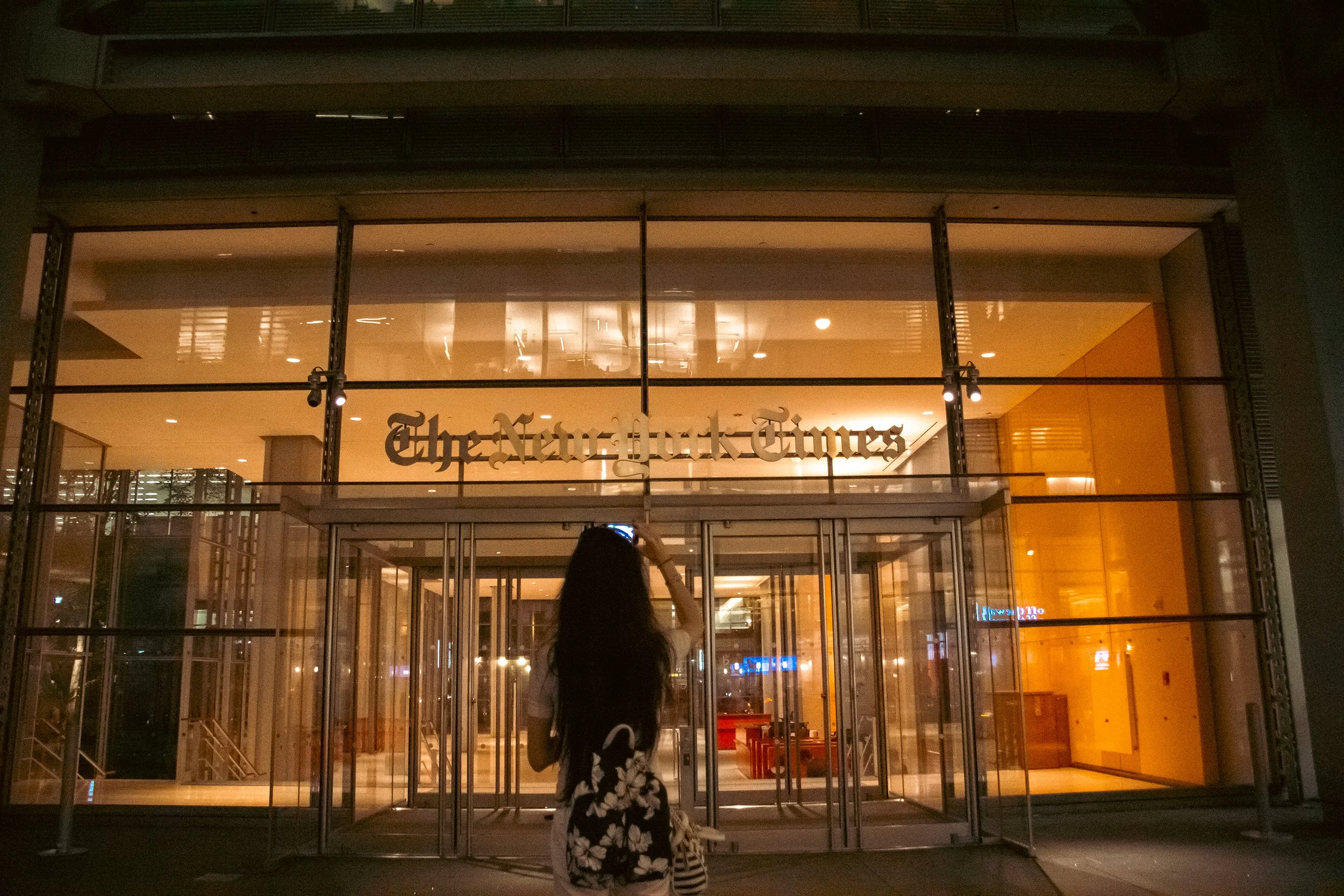
One of the people I got to know was Mike Kamber - a veteran photojournalist, former New York Times foreign correspondent and photographer, and founder/director of the Bronx Documentary Center. Kamber spent decades covering conflict and social issues, including Iraq and Afghanistan.
One afternoon, while talking to Mike about being in the mix versus what people will actually pay attention to, he told me how he found himself in the middle of it all - being shot at, risking it all - because he wanted to be part of informing a society that didn't really want to know. He talked about how discouraging that could be.
On a much smaller scale, I can relate.
When Heather first came to NYC and was staying with me in Bronx Little Italy, one of the things I did immediately was tell her what areas to stick to and where the boundaries were - places where it would be best she didn't cross into. She would be okay around the neighborhood because there were certain people who knew she was connected to me and she'd be protected.
She didn't like that.
"I feel like a prisoner," she said.
Until one day, while I was busy in the neighborhood, she tested the boundary while going for a walk.
"Okay, I get it."
She did GREAT in the Bronx. She's feisty. 😉❤️
The BDC is in the South Bronx, in the Melrose neighborhood. And the South Bronx is a whole other level.
The South Bronx is almost the opposite of Vancouver: dense, loud, gritty, intensely urban and constantly alive. Instead of Vancouver's greenery, detached homes, quiet streets and polished public spaces, imagine blocks of brick apartment buildings, fire escapes, bodegas, elevated trains, basketball courts, traffic, sirens and people everywhere.
It has a deep Puerto Rican, Dominican, Caribbean and Black cultural identity, and it's famously where hip-hop emerged in the 1970s. The neighborhood also carries the scars of decades of poverty, disinvestment, arson and urban collapse, although many areas have changed dramatically since then.
What might feel chaotic or intimidating to a Vancouverite is often simply the everyday rhythm of a community where people live much closer together and public life happens directly on the street. Vancouver feels like a city carefully arranged around people; the South Bronx feels like a city shaped by the people who refused to leave.
Anyway, I miss the BDC. It's just another of many things that shaped who I am today.